Riccardo’s genealogy project

When I am not busy catching neutrons, I like to dig into archives, old records, family documents, parish registers, newspapers, and court files.

Like many people born in Trieste, a harbour city on the frontier between worlds, my family heritage is deeply intertwined with history: the Austro-Hungarian Empire, the maritime republics of Venice and Dubrovnik, the long confrontations with the Ottoman Empire, and the tumultuous path that eventually led to Italy’s unification.

This genealogy project aims to reconstruct fragments of that past, connecting individual lives to the broader political, maritime, and commercial history of the Adriatic and Central Europe.

Sources, documentation, and long-term vision

This research is documented and continuously updated on MyHeritage, where family trees, archival references, and primary sources are curated and cross-checked.

In parallel, I curate and maintain a private archive of original family documents dating back to the mid-1800s, including letters, certificates, photographs, notebooks, and official records that have been passed from one generation to the next.

The long-term goal of this project is to write a historical novel, integrating documented historical facts with my own personal interpretation of events, places, and characters.

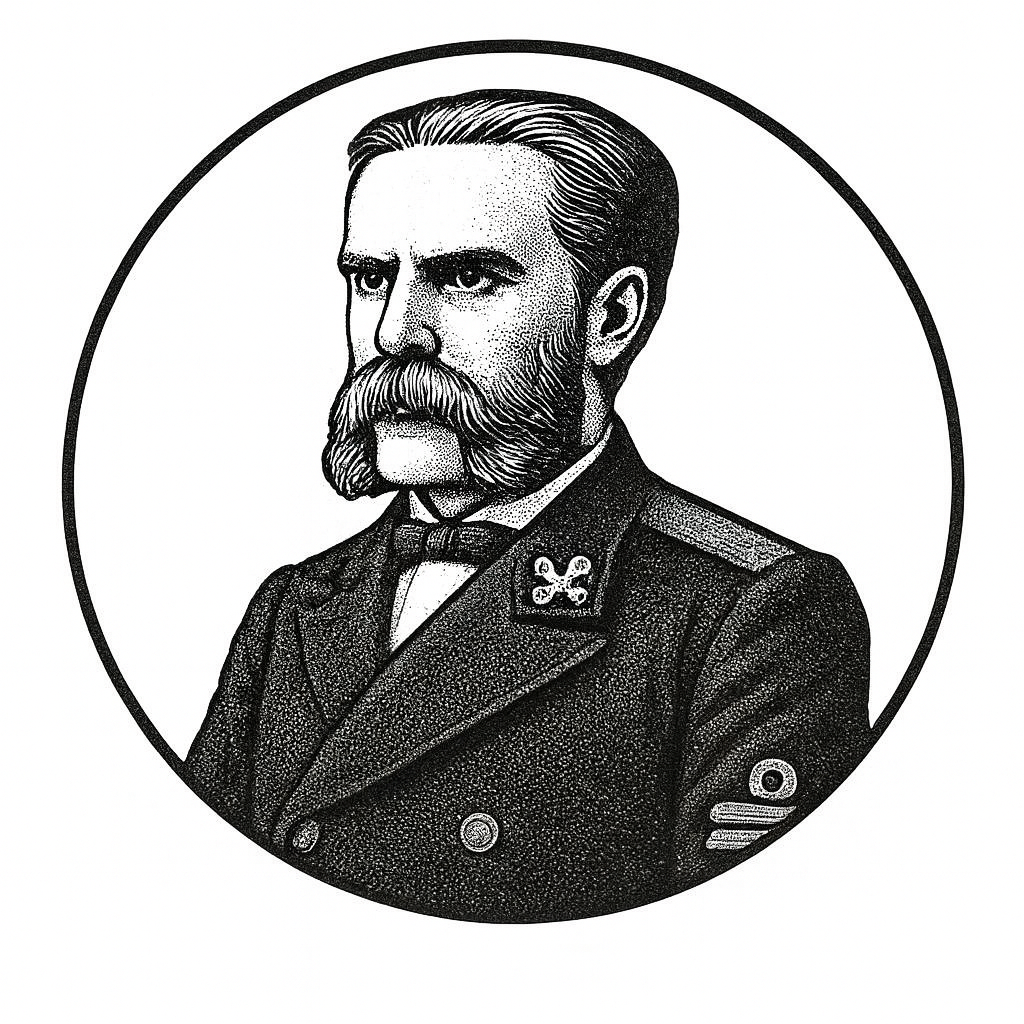
Berberović / Berberovich family

Berberović

“Fighting pirates since 1684”

This branch represents the maternal side of my family.

The Berberović were a family of ship captains and priests who were awarded land in the Bay of Kotor for their services to the Republic of Venice during the War of Morea against the Ottoman Empire.

The historical home of the Berberović family is Morinj, in the Bay of Kotor. Over the centuries, members of the family worked as ship captains, ship owners, merchants, and orthodox priests deeply embedded in Adriatic maritime life.

Notable members include the brothers Andrija and Krsto Berberović, whose confrontations with pirates are well documented in newspapers from the 1820s.

Another prominent figure is Katarina Berberović, who married Bishop Georgije Nikolajević, a key cultural and religious figure of his time, and her brother Krsto Markov, a polyglot who reportedly spoke eleven languages and served as a captain for Austrian Lloyd.

Among the most remarkable figures is Captain Marko Berberović, who was awarded the Order of Danilo I and served successively as captain for the Austrian Crown, the Kingdom of Montenegro, and the Emperor of All Russias. His career came to a dramatic end when he was forced to make a daring escape from Odessa in 1917, during the Russian Revolution.

Trifić family

Trifić / Trifich

“Persian spices, Indian coffee, exotic remedies”

This is another maternal branch of my family.

The Trifić (Trifich) were merchants originating from Kostajnica, on the Military Frontier, with commercial activities extending to Agram (Zagreb), Karlovac, Laibach (Ljubljana), and Trieste.

Members of the family married into established and sometimes noble families, including Konstantin Trifich, who married Sofie von Thodorovic.

Newspapers and court documents from the period show a history of alternating fortunes. Some family members successfully developed international trade networks, dealing in coffee from the Indies, spices from the Far East, and imported goods that supplied the growing urban markets of Central Europe.

Others pursued more ambiguous commercial ventures, including the sale of dubious remedies, products advertised with near-magical properties, and early chemical preparations used as pesticides. While some prospered, others eventually faced bankruptcy, lawsuits, and the volatility of nineteenth-century trade.

Vičič family

Vičič

“Be fruitful and multiply”

This branch is also on my maternal side. The Vičič family has roots in Adelsberg, today known as Postojna.

The earliest documented direct ancestor is Josef Vičič (German spelling: Joseph Vitschitsch), listed in the Hof- und Staats-Schematismus des Österreichischen Kaiserthumes of 1807 as an Imperial–Royal paymaster (Zahlmeister) at the k. k. Cameral-Kriegs- und Bancal-Zahlamt in Laibach (Ljubljana).

His son Jakob Vičič, a master coppersmith (Kupferschmiedemeister) and property owner in Postojna, appears in the early history of Postojna Cave. He is documented as a participant in exploratory work in April 1818, during preparations for the visit of Emperor Francis I of Austria.

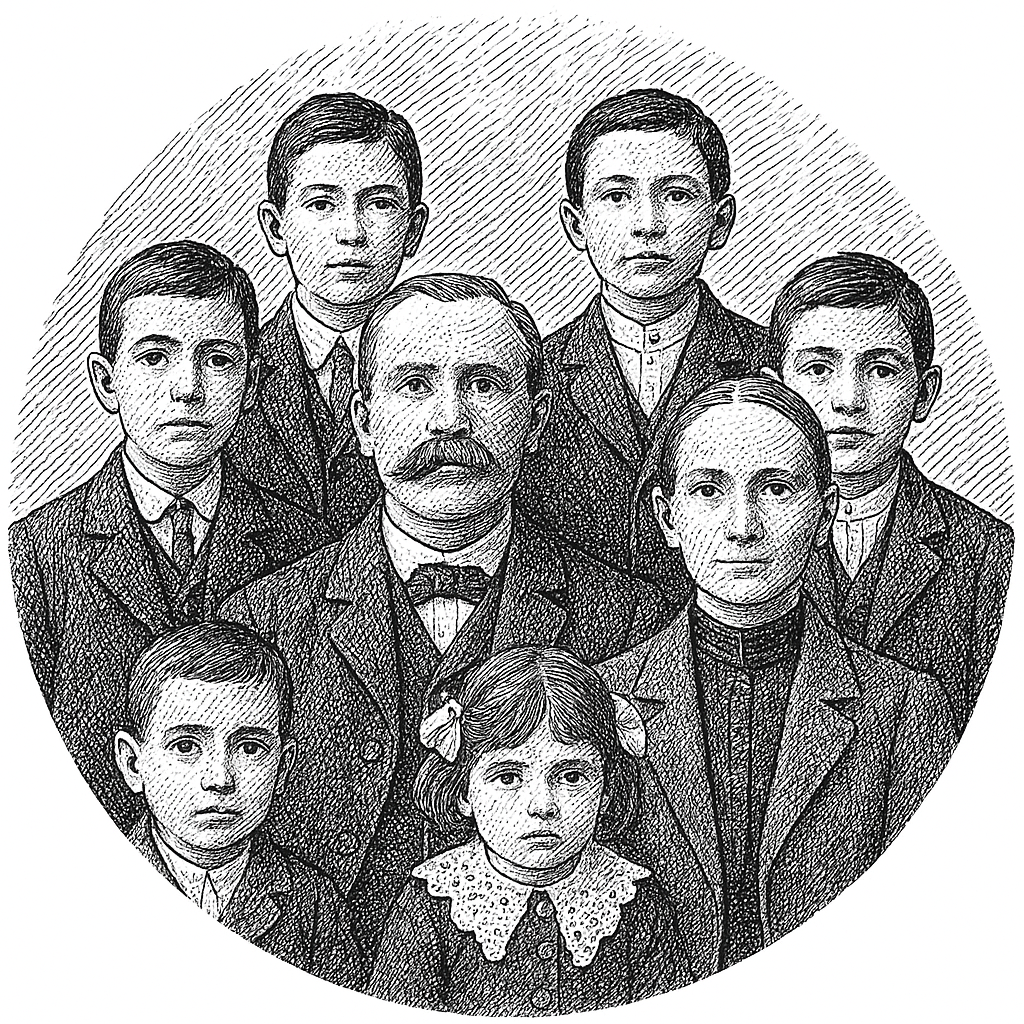
Jakob’s daughter Franziska married the merchant Nikola Trifich, linking this branch to the Trifić / Trifich family. The Vičič line is also notable for its large families: Franziska’s brother Miroslav Vičič—mayor of Postojna in 1880 and founder of the local fire brigade—had seven children, while Karl Leopold Vičič, who married into the Lenassi family, had at least eleven.

As a result, the Vičič branch is the one in which I count the largest number of cousins.

Vodopivec / Bevilacqua family

Vodopivec / Bevilacqua

“Humble hands, lasting roots”

The Vodopivec / Bevilacqua family belongs to my paternal line and was of humble, rural origin. For generations, family members lived in and around the village of Dolina, on the outskirts of Trieste. They worked primarily as artisans and agricultural laborers: one documented ancestor was a tailor, while others cultivated land owned by wealthier families or worked small plots of their own.

Through marriage, the family became connected to the Mahnič family, who owned a modest vineyard and operated their own windmill, providing a degree of local economic stability. Daily life was shaped by manual work, seasonal rhythms, and strong ties to the land rather than public office or maritime trade.

My great-grandfather, Ludvik, served as a soldier in the Austro-Hungarian Army, reflecting a tradition of military service at the level of ordinary conscripts rather than commissioned officers.

Following the collapse of the Austro-Hungarian Empire and the forced Italianisation of Trieste, the family name was translated into Italian as Bevilacqua. While I have chosen to retain this Italianised form, my father, in adulthood, decided to reclaim the original Slovenian surname Vodopivec, reflecting different but equally legitimate relationships with our shared history.

Vanoni family

Vanoni

“Railways to Italy”

The Vanoni family belongs to the Italian side of my family. Their origins lie in Cugliate, a village in northern Lombardy, close to the Swiss border. This geographical position is reflected in the family’s history, which includes marriages with Swiss families, most notably the Casazza.

The Vanoni were landowners, and several family members were involved in local political life under Austrian rule. When Lombardy became part of the Kingdom of Italy, the family aligned with the new political order, adapting to the changing institutional landscape.

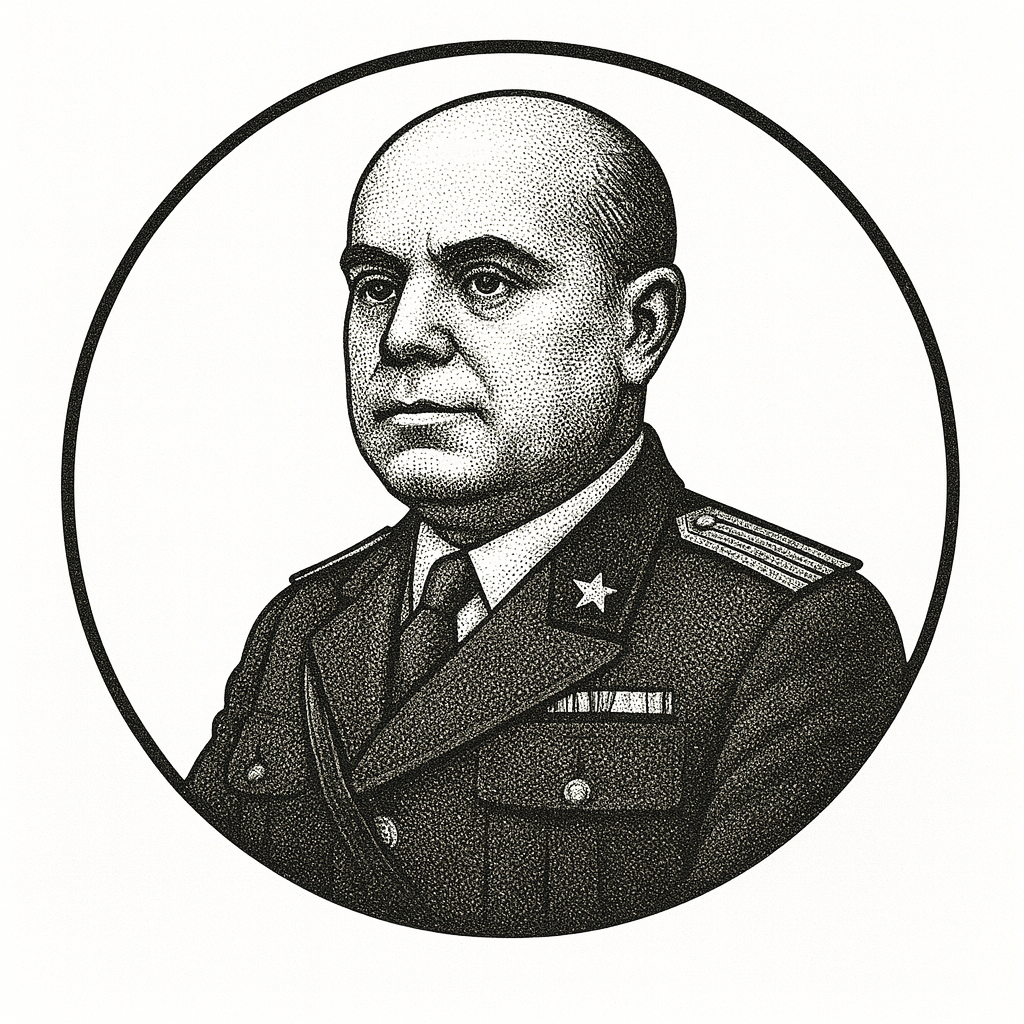
After the First World War, several Vanoni were awarded the title of Cavaliere di Vittorio Veneto, in recognition of their military service. They had fought on the Italian front, on the opposite side from other branches of my family such as the Vodopivec, the Vičič, and the Berberović.

In the interwar period, members of the family entered the civil service, working as railway engineers and station masters. This professional path brought the Vanoni from Lombardy to Trieste after 1918, following the city’s incorporation into Italy.

Alongside technical and administrative careers, artistic talent also ran in the family. My grandfather Luigi Vanoni was a painter, and his cousin Vittorio Vanoni a musician. Unfortunately, I did not inherit these artistic abilities, though their presence remains part of the family’s cultural legacy.

Benfanti family

Benfanti

“All the king’s soldiers and all the king’s men”

The Benfanti branch entered my family history at the end of the First World War, when members of the family arrived in Trieste in 1918 as officers of the Regio Esercito.

A family with roots in Palermo, Sicily, and bearing a characteristically Sicilian surname, the Benfanti are a branch that proves difficult to trace further back in time through archival sources.

Two brothers, Isidoro and Carmelo Benfanti, settled in Trieste and married women of Slavic origin, reflecting the multicultural fabric of the city in the immediate postwar period. Isidoro married Anastasia Berberović, while Carmelo married Caterina Caktaš from Nerezine.

Their sister, Caterina Benfanti, married a man named Favarò; surviving family photographs suggest a life of relative prosperity. Another brother, Bartolo Benfanti, moved to Genoa, and his descendants later emigrated to the United States, where the family is said to have built considerable wealth.

Natoli family

Natoli

“From Provençal knights to Sicilian palaces”

The Natoli family has a long and well-documented history in Sicily and belongs to the ancient Sicilian feudal nobility, with origins traced back to Provence.

According to historical tradition, the family moved from France to the Kingdom of Naples with Giovanni di Natoli, a royal knight who followed his relative Charles I of Anjou, Count of Provence and brother of the King of France. Giovanni arrived in Italy in 1266 together with the Angevin forces, accompanied by three of his five sons, all knights holding the title of milites regii.

In 1343, the family relocated from the Kingdom of Naples to the Kingdom of Sicily, settling in Messina with Antonino Natoli (Antoninus), who followed Queen Eleanor of Anjou, wife of King Frederick III of Aragon. In Sicily, Antonino Natoli was granted several feudal estates, consolidating the family’s position among the local nobility.

Over the centuries, the Natoli family produced numerous notable figures. Among them are a member proclaimed a saint in 1596, the Baron of the Castle of Sperlinga, and Giovanni Natoli Lanza Alifia Ruffo, who was appointed the first Duke of Archirafi by King Charles III of Bourbon.

In the eighteenth century, Marquis Vincenzo Natoli commissioned the construction of Palazzo Natoli in the historic center of Palermo, a residence that today survives as a boutique hotel.

In more recent times, the family includes Luigi Natoli, historian and novelist, his son Aurelio Natoli, a member of the Italian Constituent Assembly, and Aurelio’s son Domenico Natoli, a well-known illustrator and journalist.

My own connection to the Natoli family is less glamorous, yet no less meaningful. Benedetta Natoli, mother of Isidoro, Carmelo, Bartolo, and Caterina Benfanti, descended from a cadet branch of the noble Natoli line. In Sicily, however, female descendants typically inherited little more than a surname.

Staderini & Grazzi families

Staderini & Grazzi

“From humble origins to the highest honours”

This branch belongs to my Italian side of the family, rooted in the Valdarno region of Tuscany.

The Staderini and the Grazzi were humble contadini—farmers—who spent generations lavorare la terra, working the land. Parish registers document this continuity with unusual clarity: for centuries, the profession appears again and again in marriage and death records.

The first Staderini known to leave Tuscany was Loretta Staderini, who moved to Trieste when Italy re-established full control of the city in the post-war years, after the Free Territory period. Despite spending her entire adult life in Trieste, Loretta kept her unmistakable Tuscan accent until the very last days of a very long life.

Her daughter, Lucia Bevilacqua, is an Officer of the Order of Merit of the Italian Republic — Italy’s highest honour of merit.

This genealogy project is ongoing and will expand as new documents, sources, and family branches are added.